
How to Film When You Hate Being on Camera
Learning how to film when you hate being on camera starts with a small shift: your video diary does not have to contain your face. Plenty of people dislike how they look or sound on video, and plenty of them still want a record of their days. Both can be true at once.
A video diary is a collection of short moments from your life, not a series of self-portraits. Below you will find ways to build one that is mostly about the world around you, with you in it only as much as you choose.
Why being on camera feels awful, and why it matters less than you think
Most people cringe at their own recorded voice and face. It is common, and it usually softens once you stop treating each clip as a performance. A year from now you will care far more about what the clip shows than about how you looked in it.
Still, there is no reason to force it. You can keep a diary for months without a single selfie, and the result can be warmer and more personal than you expect.
Point the camera away from yourself
The simplest way to film when you hate being on camera is to film what you see instead of who you are. The back camera of your phone does this naturally. You hold it the way you hold your gaze.
Here is what a day of faceless clips could look like. A kettle starting to steam in the morning. The view from the bus window. Your hands chopping vegetables. A plant on the windowsill that has grown crooked toward the light. The street outside your door just before it gets dark.
None of these needs commentary. Ten seconds of the real thing is enough, and the sound does half the work: a spoon against a mug, rain on the glass, a neighbour's radio through the wall.
Keep your voice off, or keep it small
If you dislike how you sound, film in silence. Clips with only background noise often feel more honest than narrated ones, and you can add music later if you want a mood.
If you want a little spoken context, keep it to a few words. A single sentence like "Tuesday, cold, finally quiet" is plenty. You do not need to explain the clip, and you do not need to look at the lens while you say it.
Show yourself indirectly
Some days you will want to be in the record somehow. You can do that without a face-forward shot:
- Your shadow on a wall or a pavement.
- Your reflection in a shop window, small and far away.
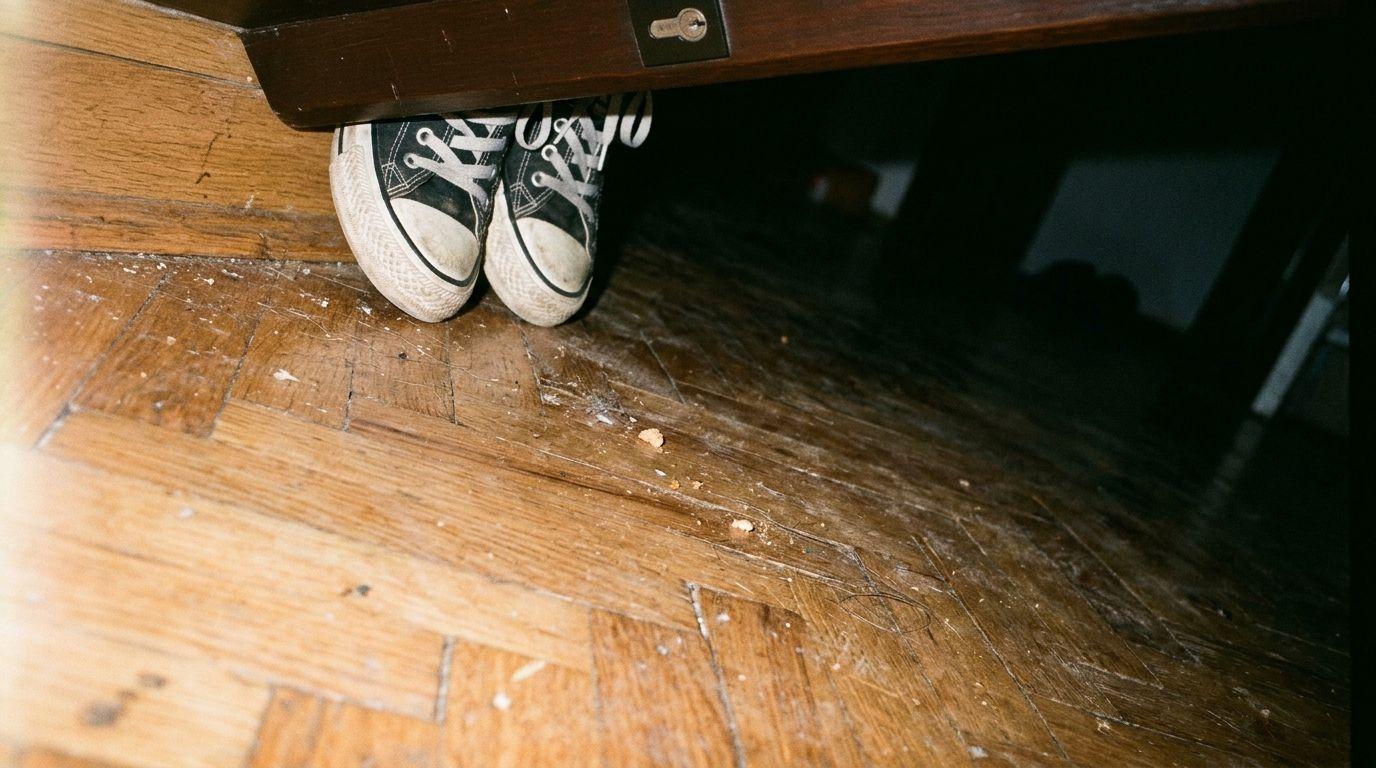
- Your feet on a trail, a staircase or the kitchen floor.
- Your hand holding a cup, a book or a leash.
These clips say "I was here" more gently than a close-up does. Years later, they are often the ones that bring a day back.
Film other people with a little care
Family and friends will be a big part of any diary. Ask first if someone seems unsure, and keep clips short so nobody feels watched. A few seconds of a conversation at the table, a child stacking blocks or a friend laughing mid-story is enough.
People relax quickly when the phone is held low and pointed at something ordinary. If you want more on this, there is a full guide on filming ordinary life without staging it.
Make filming fast, so you have no time to feel awkward
Self-consciousness grows in the pause before you press record. Shorten that pause. Decide what you will film before you pick up the phone, and stop after a few seconds. Short clips leave little room to overthink.
Glisk helps here because it caps every clip at 30 seconds and places each one in a calendar by day. You open it, record, and you are done. There are no filters or effects to tweak, so there is nothing to fuss over, and nothing leaves your phone.
If you are just starting out, how to keep a video diary you will actually stick with covers building the routine itself.
Give yourself a daily rule that does not involve you
A rule removes the daily decision of what to film. A few that work well for people who avoid the camera:
- One clip of the view from wherever you are at noon.
- One clip of something you ate or drank.
- One clip of a sound you would miss if it vanished.
Pick one, or invent your own. The point is that you can follow it on a tired Wednesday without any preparation.
Decide in advance who will see it
A lot of camera discomfort comes from imagining an audience. Settle that early. A diary kept only on your phone is private by default. Glisk has no account, no cloud and no feed, so the clips stay where you recorded them unless you choose to share a finished film. Knowing that tends to loosen things up.
If you do want to keep copies elsewhere, storing family videos without the cloud explains how to do it on your own terms.
Let the edit do the gentle work
Raw clips of everyday life are rarely dramatic, and that is fine. The magic comes when you join them. A month of faceless moments, set to a song you love, becomes a film about a stretch of your life: the light changing, the weather turning, a familiar route in different seasons.
In Glisk you can build one film from a month, a year or any days you pick, add a track from your phone and choose which part of the song plays. You can keep the clips' own sound or mute it. The walkthrough on turning a month of clips into one movie shows the steps.
You may notice something. When you watch the film, you will not miss your face in it. You will feel the days.
A small plan for this week
Try three days. On day one, film only what is in front of you, three clips at most. On day two, add one clip of your hands or your feet. On day three, ask a person close to you whether you can film them for ten seconds doing something they would do anyway.
That is enough to learn what you like. Some people end up never filming themselves, and their diaries are lovely. Others find that after a few weeks, a quick glimpse of their own face no longer bothers them. Either path is fine.